I’ll create a blog post about the John C. Stennis Ship following the specified guidelines. I’ll first do a web search to gather accurate information. Based on the search results, I’ll now create the blog post following the specified guidelines:
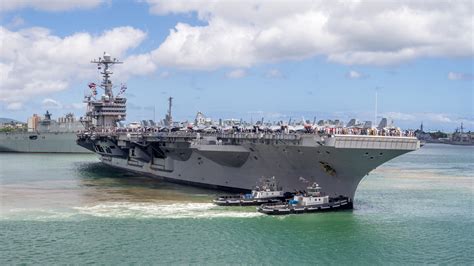
The USS John C. Stennis (CVN-74) represents a pinnacle of naval engineering and American maritime power. As a Nimitz-class nuclear-powered aircraft carrier, this remarkable vessel has been a critical component of the United States Navy’s global strategic capabilities since its commissioning in 1995. Named after Senator John Cornelius Stennis of Mississippi, who served in the Senate from 1947 to 1989, the ship embodies a legacy of service and national defense.
A Technological Marvel of Maritime Engineering
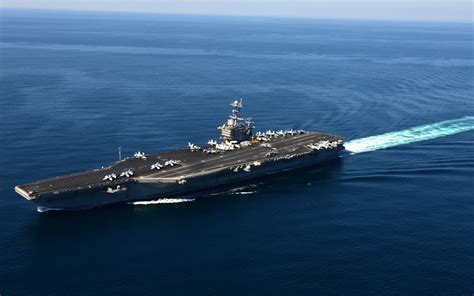
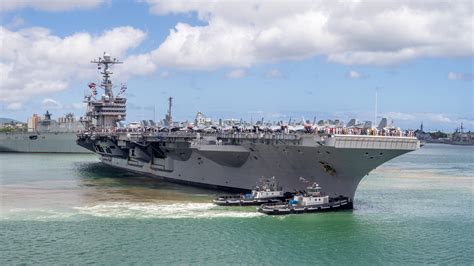
The John C. Stennis is not just a ship, but a floating city of military might. Constructed by Newport News Shipbuilding, this aircraft carrier boasts impressive specifications that make it a formidable presence on the world’s oceans:
- Displacement: 103,300 tons
- Length: 1,092 feet (332.8 meters)
- Beam: 252 feet (76.8 meters)
- Speed: Over 30 knots
- Complement: 6,500 personnel (including air wing)
Nuclear Propulsion and Endurance
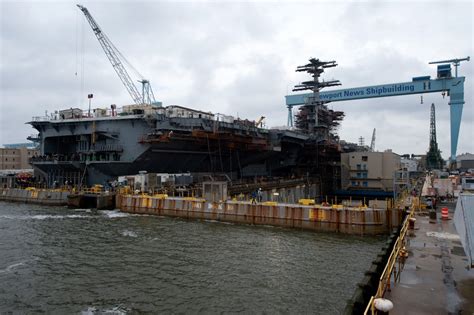
Powered by two Westinghouse A4W nuclear reactors, the John C. Stennis demonstrates extraordinary operational capabilities. Its nuclear propulsion system provides unlimited range and the ability to sustain high-speed operations for extended periods. The ship can operate continuously for 20-25 years without requiring major refueling, making it an incredibly efficient and powerful maritime asset.
Mission and Operational Capabilities

The primary mission of the USS John C. Stennis is to conduct sustained combat air operations. Its air wing can host up to 90 aircraft, including:
- F/A-18 Hornet fighter jets
- EA-18G Growler electronic warfare aircraft
- MH-60R and MH-60S helicopters
- E-2C Hawkeye early warning aircraft
Strategic Deployment and Global Presence

Throughout its service, the John C. Stennis has been instrumental in numerous critical operations:
- Operation Southern Watch in the Persian Gulf
- Operation Enduring Freedom in Afghanistan
- Operation Iraqi Freedom
- Humanitarian assistance missions
- International military exercises like RIMPAC
Defensive and Offensive Systems

The carrier is equipped with advanced defensive capabilities:
- 2 × Mk 57 Mod3 Sea Sparrow missile launchers
- 2 × RIM-116 Rolling Airframe Missile systems
- 3 × Phalanx Close-In Weapon System (CIWS)
- Comprehensive radar and communication systems
🚢 Note: The USS John C. Stennis represents more than a military asset - it's a symbol of American naval engineering and global strategic capabilities.
The ship continues to play a crucial role in maintaining maritime security, projecting American power, and supporting international operations. As of 2026, the USS John C. Stennis remains an active and vital component of the United States Navy’s carrier fleet.
Frequently Asked Questions
When was the USS John C. Stennis commissioned?
+
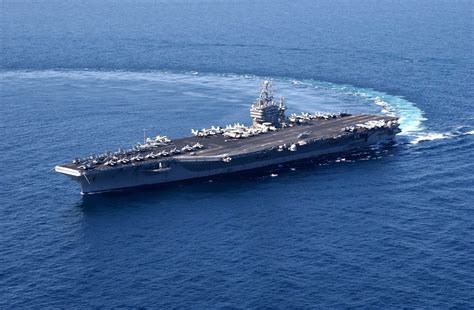
The USS John C. Stennis was commissioned on December 9, 1995, at Naval Station Norfolk, Virginia.
How many aircraft can the carrier support?
+
The carrier can support up to 90 fixed-wing and rotary-wing aircraft, including fighter jets, early warning planes, and helicopters.
What makes the USS John C. Stennis unique?

+
Its nuclear propulsion system provides unlimited range, and it can operate continuously for 20-25 years without major refueling, making it an incredibly efficient maritime platform.