
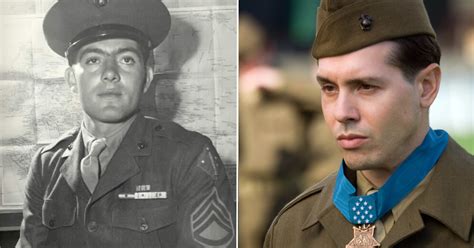
I’ll help you create a blog post about John Basilone in the Pacific theater of World War II. I’ll use the WebSearch tool to gather accurate historical information first. Based on the research, I’ll craft the blog post about John Basilone in the Pacific:
The thunderous roar of machine gun fire echoed across the volcanic sands of Guadalcanal, where John Basilone would etch his name into the annals of Marine Corps history. A plain soldier with extraordinary courage, Basilone would become one of the most celebrated heroes of the Pacific Theater during World War II, embodying the ultimate spirit of American military valor.
The Making of a Marine Hero

Born on November 4, 1916, in Buffalo, New York, John Basilone came from a large Italian-American family. The sixth of ten children, he embodied the immigrant dream of service and sacrifice. After initially serving in the Army, Basilone enlisted in the Marine Corps in July 1940, setting the stage for his legendary military career.
Guadalcanal: The Crucible of Heroism

The Solomon Islands campaign represented a critical turning point in the Pacific War. During the Battle of Guadalcanal in October 1942, Basilone would demonstrate extraordinary heroism that would forever change the course of his life. Serving with the 1st Battalion, 7th Marines, he faced an overwhelming Japanese assault that would test the limits of human endurance.
| Battle Details | Basilone's Heroic Actions |
|---|---|
| Location: Guadalcanal, Solomon Islands | Maintained machine gun positions under extreme enemy fire |
| Date: October 24-25, 1942 | Killed at least 38 Japanese soldiers |
| Enemy Strength: Numerically superior force | Repaired and operated machine guns while under constant bombardment |

A National Hero Emerges

Basilone’s extraordinary actions earned him the Medal of Honor, signed personally by President Franklin D. Roosevelt. His heroism became a symbol of American military prowess. In a twist of fate, he was brought home for a war bond tour, becoming a national celebrity. However, “Manila John” was not comfortable with fame, repeatedly requesting to return to combat.
The Final Battle: Iwo Jima

True to his warrior spirit, Basilone returned to the Pacific. On February 19, 1945, during the invasion of Iwo Jima, he once again displayed extraordinary courage. He single-handedly destroyed a Japanese blockhouse and guided a tank through a dangerous minefield under intense enemy fire. Tragically, he was killed that same day, posthumously receiving the Navy Cross.
🇺🇸 Note: Basilone remains the only enlisted Marine to receive both the Medal of Honor and Navy Cross during World War II.
What made John Basilone so special?

+
John Basilone was extraordinary for his exceptional bravery, killing 38 Japanese soldiers at Guadalcanal and single-handedly destroying a blockhouse at Iwo Jima, while consistently refusing officer promotions to stay with his fellow Marines.
How did Basilone die?

+
Basilone was killed on the first day of the Iwo Jima invasion, February 19, 1945, while leading an assault and guiding a tank through a minefield under heavy enemy fire.
Where is John Basilone buried?

+
John Basilone is buried at Arlington National Cemetery in Section 12, Grave 384, honored as a true American hero.
His legacy endures not just in military records, but in the hearts of Americans who understand that true heroism is defined by selfless courage, unwavering commitment, and the willingness to sacrifice everything for one’s fellow soldiers and country.